Target frame rate
60 FPS
Minimum target for stable, comfortable immersive interaction
A modular image-to-VR pipeline for reconstructing, optimizing and deploying high-fidelity real-world environments with 3D Gaussian Splatting.
Results
60 FPS
Minimum target for stable, comfortable immersive interaction
~250K splats
Achieved when splats remain evenly distributed in space
<150K splats
Recommended baseline for stable standalone VR rendering
0.7-0.8
Practical quality-performance range used for VR deployment
Technical snapshot
Production pipeline for immersive real-world capture
3DGS pipeline research and XR integration
Master GIG research project, 2026
COLMAP, LichtFeld Studio, Unity, OpenXR
Reference datasets and real captured environments
Optimized, interactive VR/MR scenes
Research Project
Case study
High-quality 3DGS scenes can contain too many primitives for standalone headsets, lack explicit surfaces for collisions and remain sensitive to incomplete captures, moving objects and reflective materials. A production workflow must therefore balance reconstruction quality, splat density, GPU memory and stable stereo rendering.
Create a reproducible image-to-XR workflow that preserves visual fidelity while meeting the memory and frame-rate constraints of standalone VR hardware.
Capture sharp, clean and complete image coverage; recover cameras and a sparse point cloud with COLMAP Structure-from-Motion; train, crop and clean the Gaussian representation in LichtFeld Studio; then import it into Unity through UnityGaussianSplatting and gsplatUnity. OpenXR, single-pass rendering, fixed foveated rendering and a reduced render scale are used for VR deployment, while a simplified invisible mesh supplies collision geometry.
The resulting modular pipeline supports real-time immersive visualization at a stable 60 FPS when splat count and spatial density are controlled. Tests reached approximately 250,000 splats, while separating the visual 3DGS representation from a simplified mesh collider enabled practical physical interaction.
Technical foundation
Evolution
2026
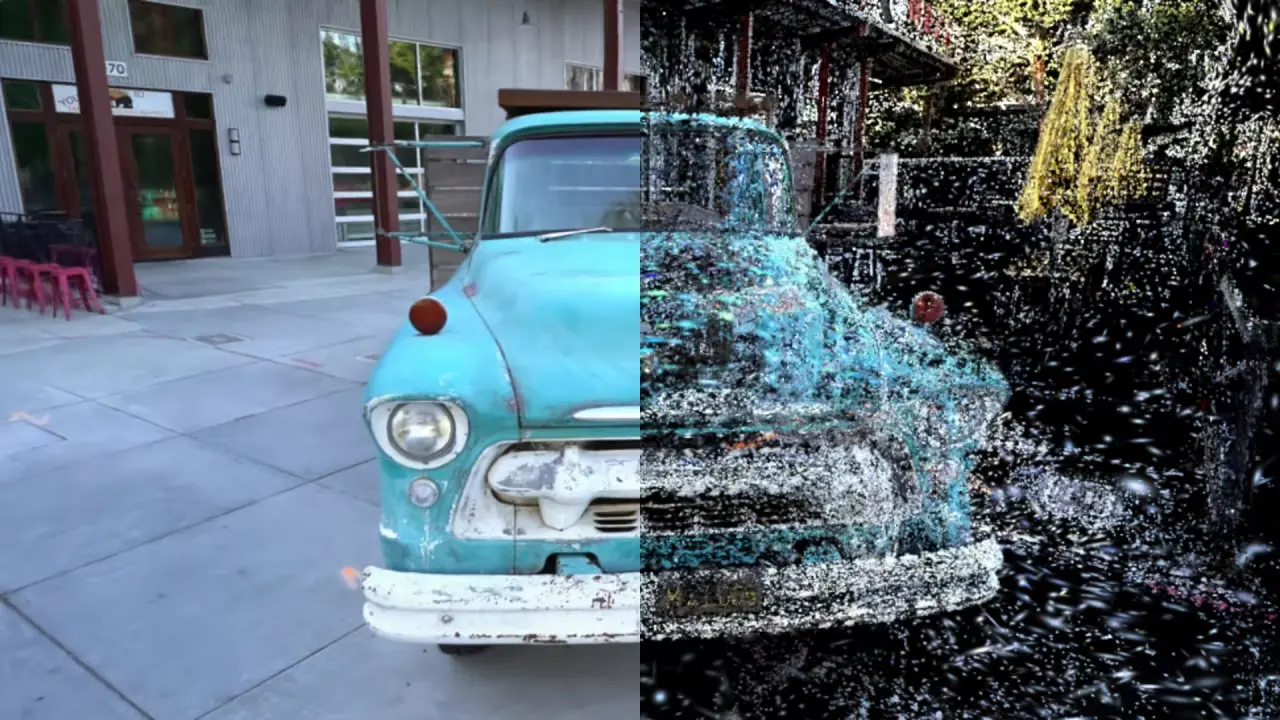
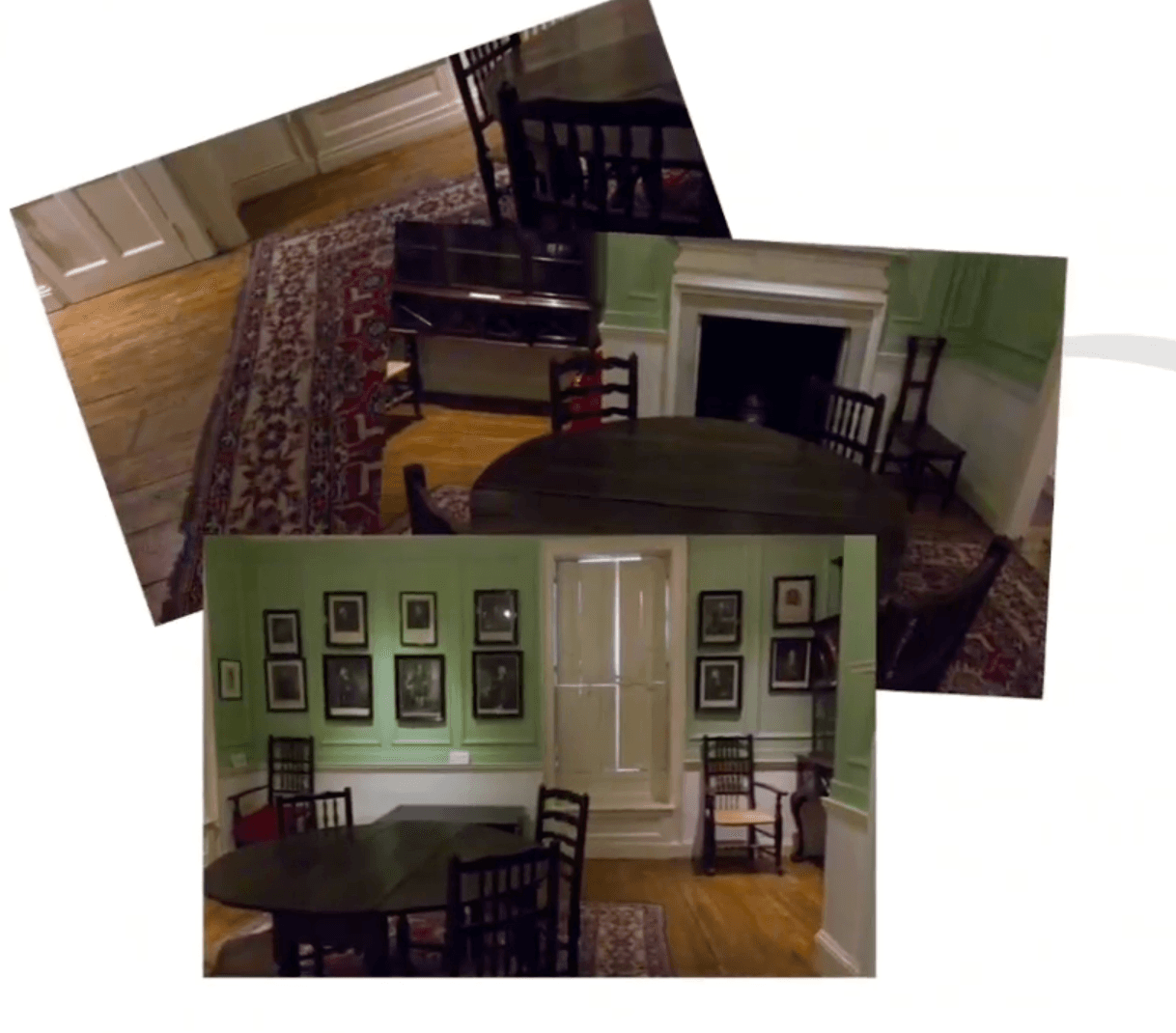
Compared reference and captured datasets across COLMAP, LichtFeld Studio, PostShot and LumaAI.
2026
Established the reconstruction, training, cleanup and splat-budget optimization stages.
2026
Integrated the optimized scene in Unity and evaluated real-time rendering and interactions in VR.
Comparison
Process
Capture sharp HD images of a static scene with clean, complete multi-view coverage.
Input
Use COLMAP Structure-from-Motion to estimate camera poses and generate the initial point cloud.
SfM
Generate the Gaussian scene in LichtFeld Studio and tune quality, iterations and maximum splat count.
Training
Crop the scene, remove noisy splats and control density to fit the target VR performance budget.
Optimization
Import the scene with 3DGS plugins and configure OpenXR, single-pass rendering, FFR and post-processing.
Runtime
Align an invisible simplified mesh collider with the 3DGS scene, then deploy the interactive experience to VR.
Output
Capture sharp HD images of a static scene with clean, complete multi-view coverage.
Input
Use COLMAP Structure-from-Motion to estimate camera poses and generate the initial point cloud.
SfM
Generate the Gaussian scene in LichtFeld Studio and tune quality, iterations and maximum splat count.
Training
Crop the scene, remove noisy splats and control density to fit the target VR performance budget.
Optimization
Import the scene with 3DGS plugins and configure OpenXR, single-pass rendering, FFR and post-processing.
Runtime
Align an invisible simplified mesh collider with the 3DGS scene, then deploy the interactive experience to VR.
Output
Project evidence
image
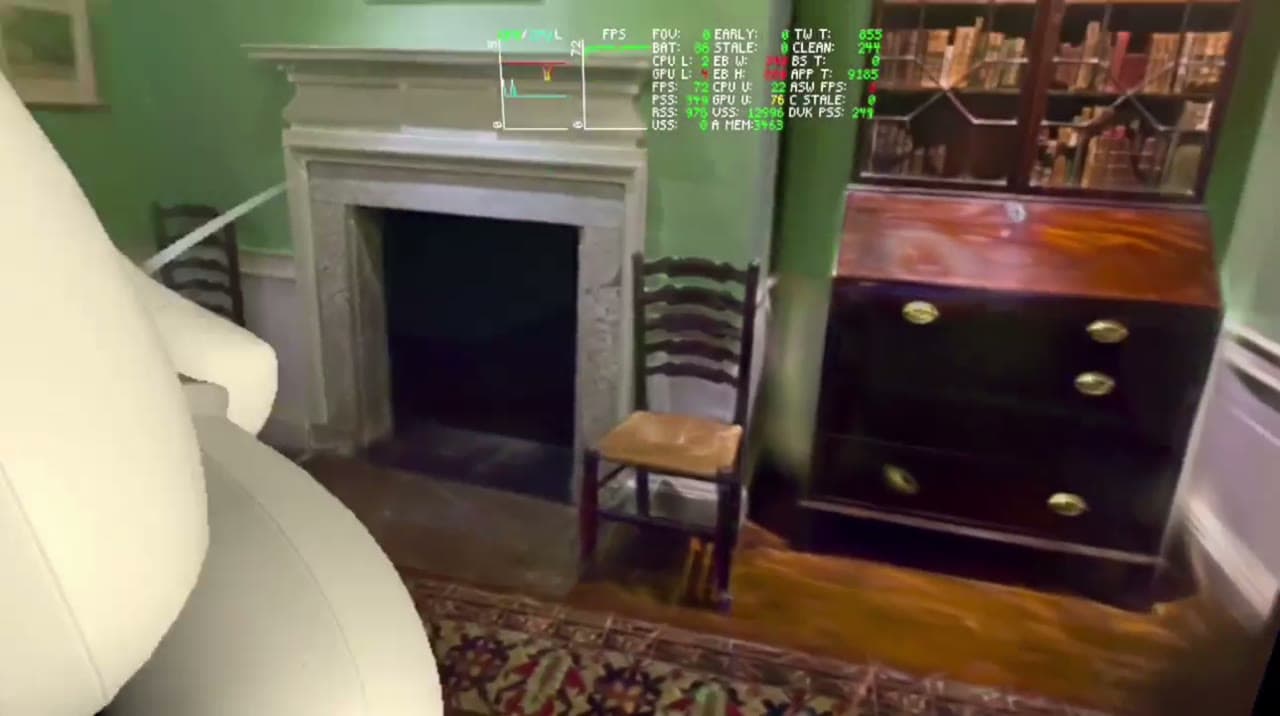
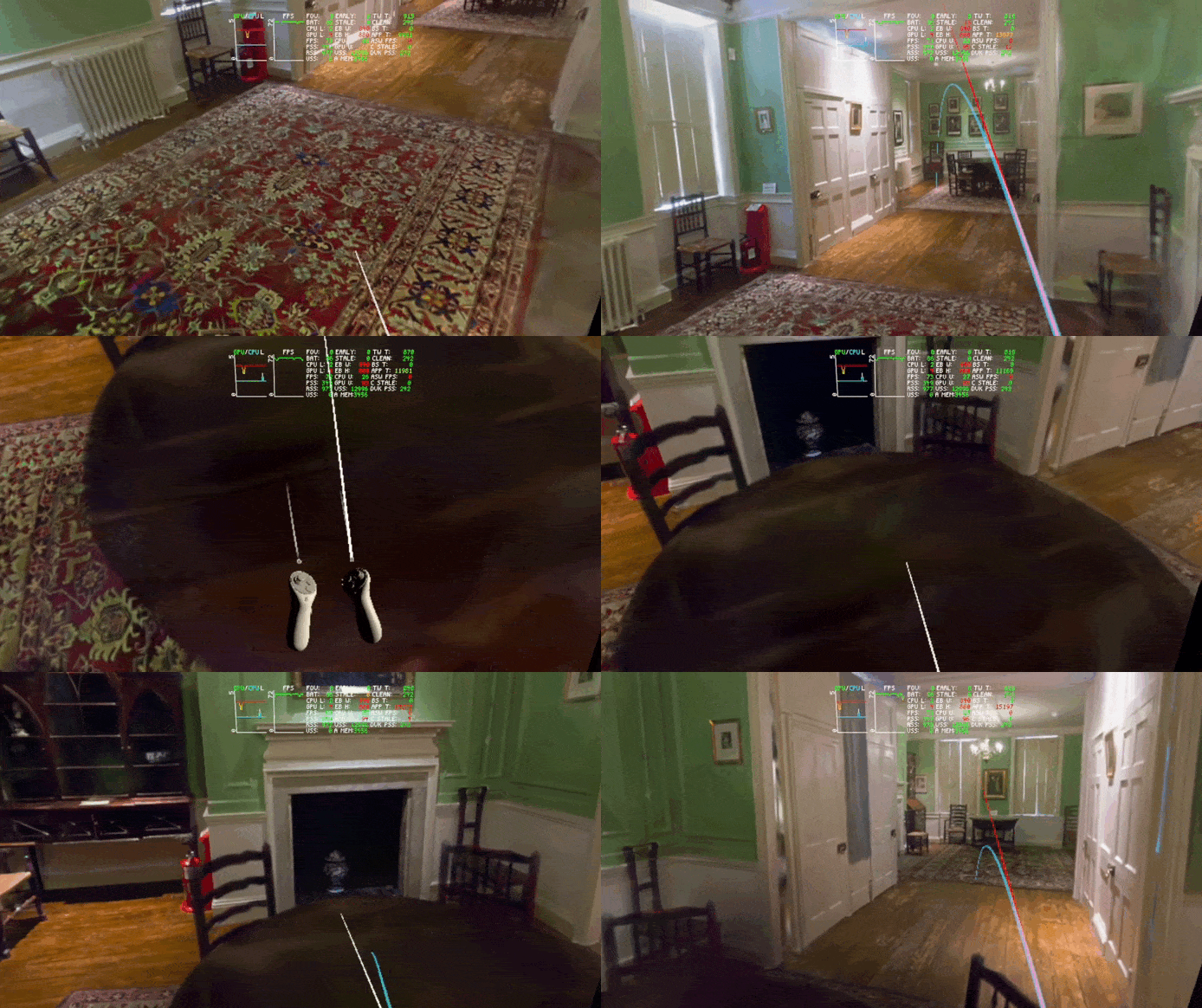
A wide view of the optimized Gaussian Splatting environment running inside the VR application.
image
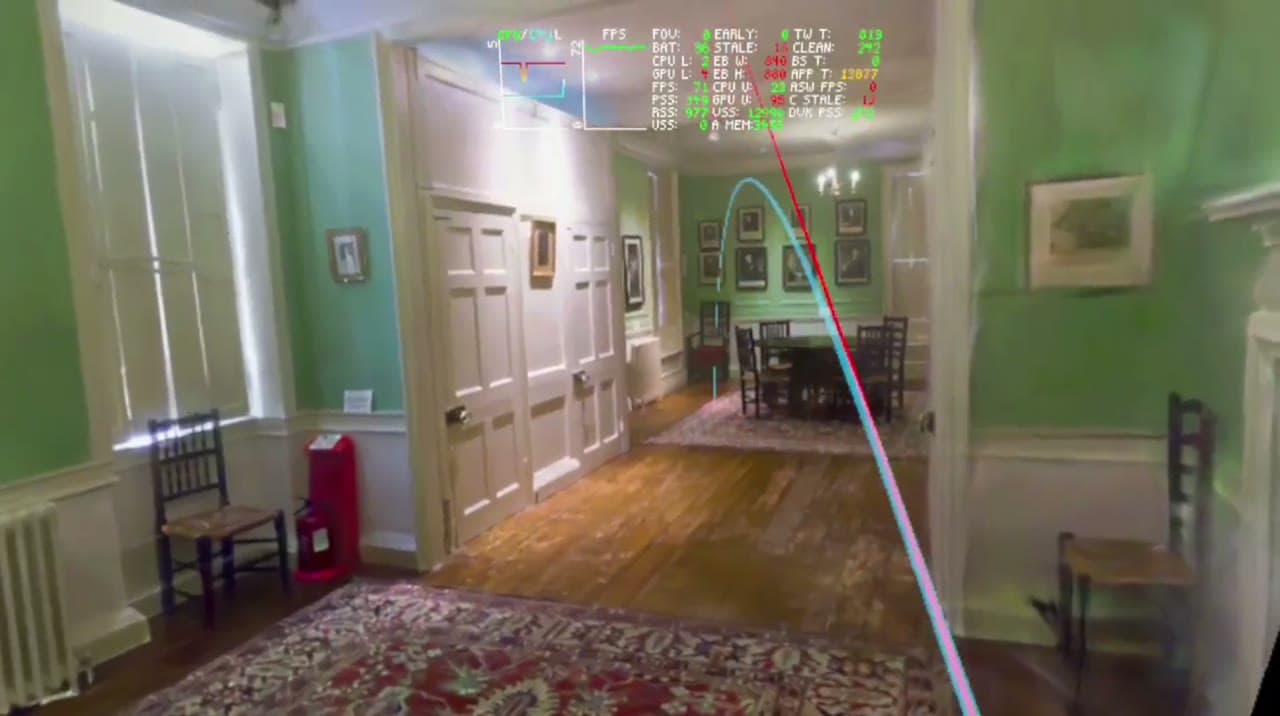
The runtime view with tracked controllers and interaction rays inside the reconstructed scene.
image
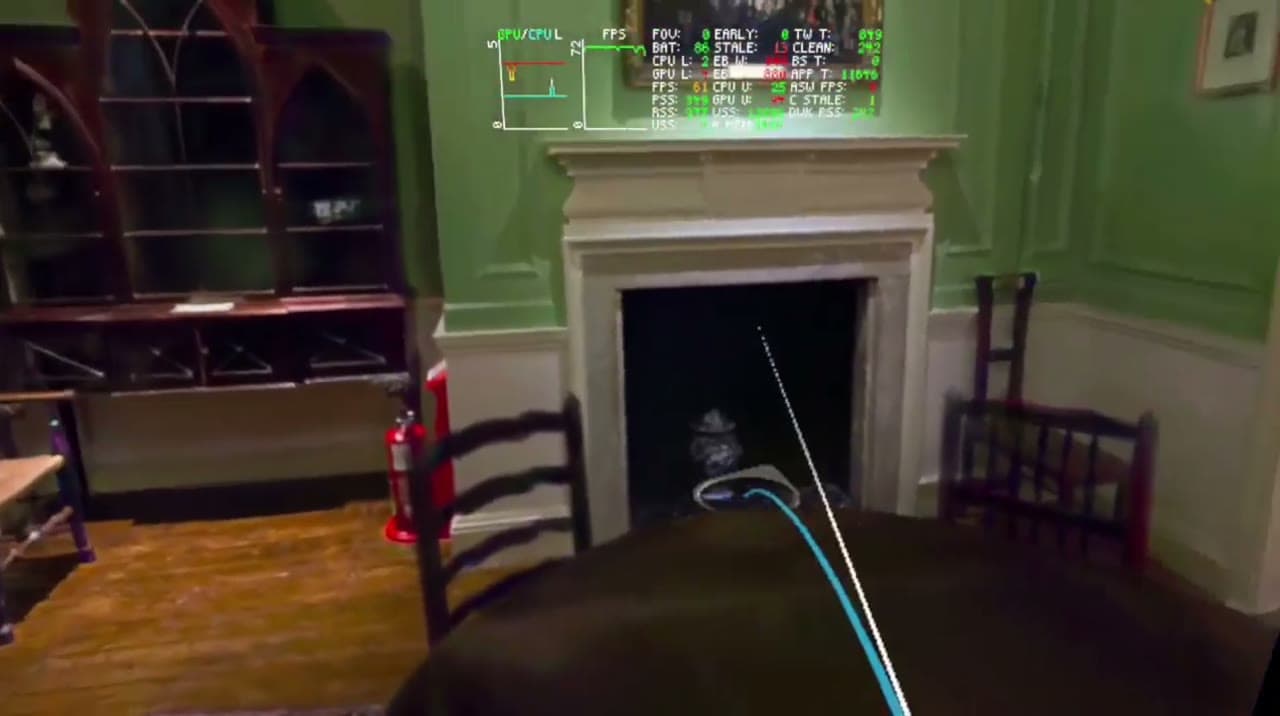
A practical interaction test used to validate navigation, pointing and collision behavior in Unity VR.
image
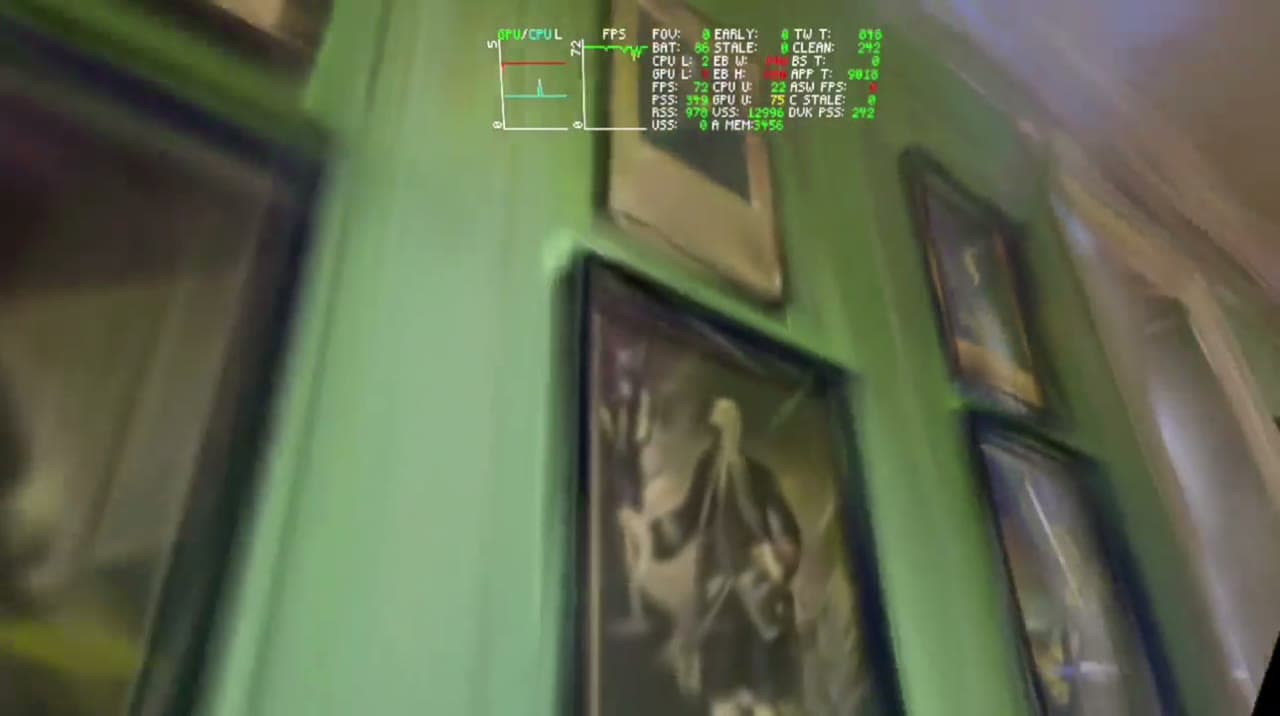
A closer view showing how furniture, walls and architectural details are preserved in the immersive reconstruction.
Implementation detail
Knowledge base
paper
Foundational paper behind real-time radiance field rendering.
documentation
Structure-from-Motion software used to estimate cameras and reconstruct the initial point cloud.
github
Open-source application used to train, optimize, crop and clean Gaussian scenes.
github
Unity implementation used to display and process 3D Gaussian Splatting assets.
References
Keep exploring